
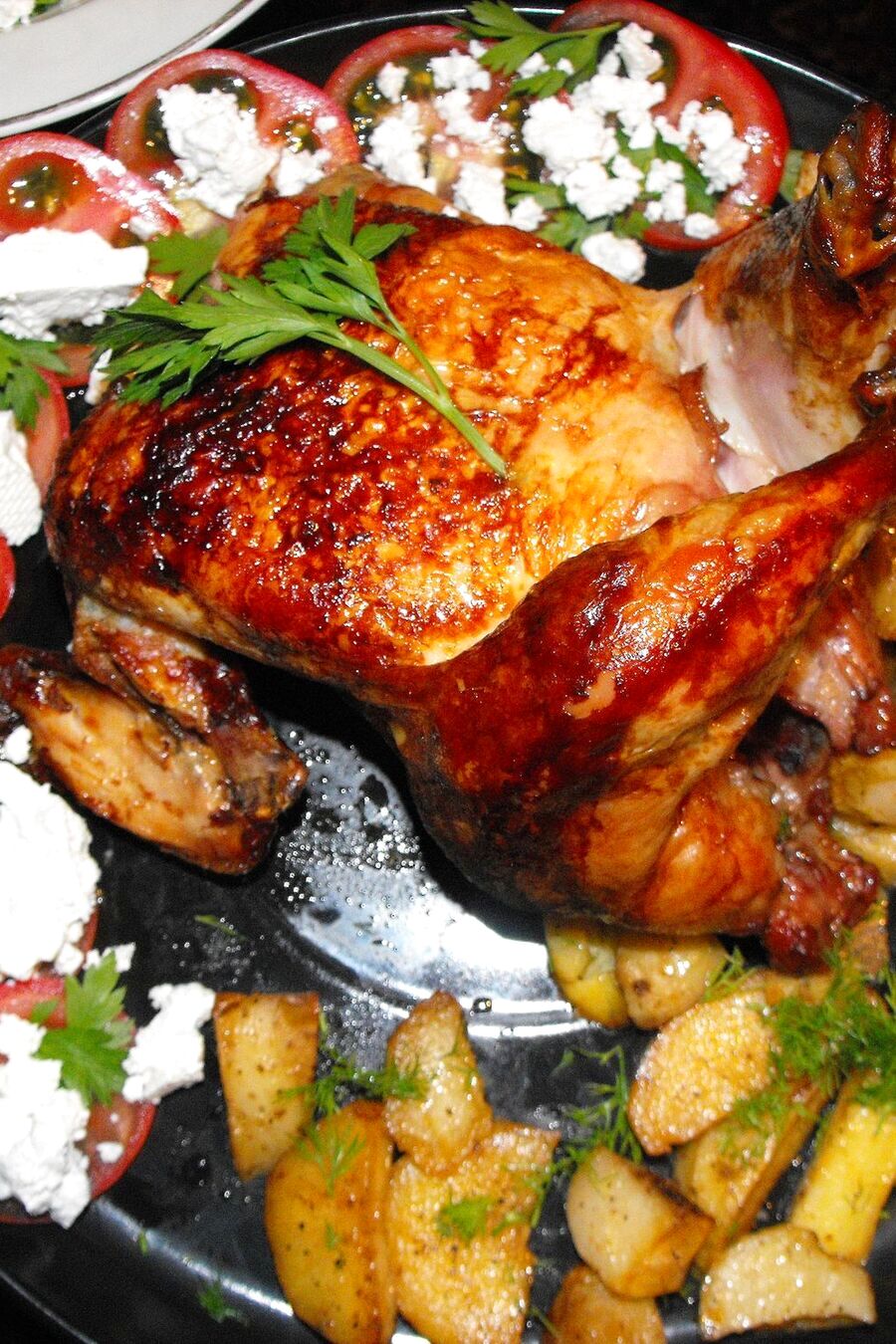
Simple chicken cacciatore with tomato, herbs, and a rich pan sauce. I make it when I want deep flavor without overcomplicating dinner.
Recipe facts
Details
- Prep: 15 min
- Cook: 55 min
- Servings: 4 servings
- Difficulty: Medium
- Cost: €€
Nutrition (per serving)
- Calories: 460 kcal
- Protein: 38 g
- Carbs: 10 g
- of which sugars: 6 g
- Fat: 26 g
- of which saturates: 7 g
- Fiber: 3 g
- Sodium: 720 mg
- Cholesterol: 130 mg
Indicative values only. This does not replace medical advice.
Ingredients
- 1 kg chicken pieces
- 1 onion
- 1 carrot
- 1 celery stalk
- 2 tablespoons extra-virgin olive oil
- 1/2 glass white wine
- 400 g tomato passata
- 1 rosemary sprig
- 1 bay leaf
- Salt and black pepper
- Olives (optional)
Method
- Brown the chicken in a casserole with oil until golden on all sides.
- Add chopped onion, carrot, and celery and let them soften.
- Deglaze with white wine and let it evaporate.
- Add passata, rosemary, and bay leaf, season with salt and pepper.
- Simmer on low for 40-50 minutes, turning now and then.
- Add olives in the last 10 minutes if using.
- Let it rest 5 minutes before serving.
Browning and base
Browning is crucial. It builds flavor and gives depth to the sauce. I do not rush this step.
I use a wide casserole so the chicken sears instead of steaming.
Rich but simple sauce
The passata matters because the sauce is built around it. If it is too sharp, a small pinch of sugar helps.
Rosemary and bay leaf are enough. Too many herbs cover the chicken flavor.
Slow simmer
Low heat makes the meat tender and the sauce creamy. I add warm water if it gets too thick.
The chicken should almost fall from the bone at the end.
Storage
It keeps 2-3 days. The next day it tastes even better.
This dish always feels like home. The slow tomato aroma calms the whole kitchen.
I prefer bone-in pieces for tenderness. Breast dries out more quickly.
If I have time, I let the chicken sit at room temperature before searing. It browns better.
When the sauce is too thick, I add a ladle of hot water, not cold.
I serve it with rustic bread because the sauce deserves a proper swipe.
A few black olives add a Mediterranean note. I keep it subtle.
The carrot in the base balances the tomato acidity. It is a small but important detail.
Freshly ground pepper at the end wakes everything up.
For guests, I use a large casserole so nothing is crowded.
I often cook it ahead. The flavor deepens overnight.
Polenta is a perfect partner for this sauce.
If I do not have wine, I use a splash of diluted apple vinegar to lift the base.
Browning forces me to slow down, and that is where the flavor is built.
A short rest with the lid on keeps the chicken juicy.
It works even in warm weather with a fresh salad on the side.
If the sauce is too loose, I simmer uncovered for a few minutes.
This is a flexible base. Mushrooms or peppers fit without changing the soul of the dish.
It reminds me of family cooking: few ingredients, time, and care.
I like knowing tomorrow's lunch is ready. It helps my weekly rhythm.
The sauce thickens as it rests. That is another reason to wait a few minutes.
For a gentler taste I use a sweeter passata.
Once learned, cacciatore becomes a reliable recipe in your rotation.
I stir with a wooden spoon. It is a small habit that makes me slow down.
When I bring this to the table, people almost always ask for seconds.
When I cook this, I remind myself that careful steps always beat rushing. It is a small habit that keeps the result reliable.
The detail that makes it work
With Simple chicken cacciatore, a small finish at the end is what makes it work every time. With 70 minutes with Medium effort, it is a recipe I can repeat easily. To keep the budget (€€), I balance with seasonal vegetables and one main protein.
FAQ
Yes, but shorten the cooking time to avoid dryness.
It helps, but you can use warm water instead.
No, they are optional.