
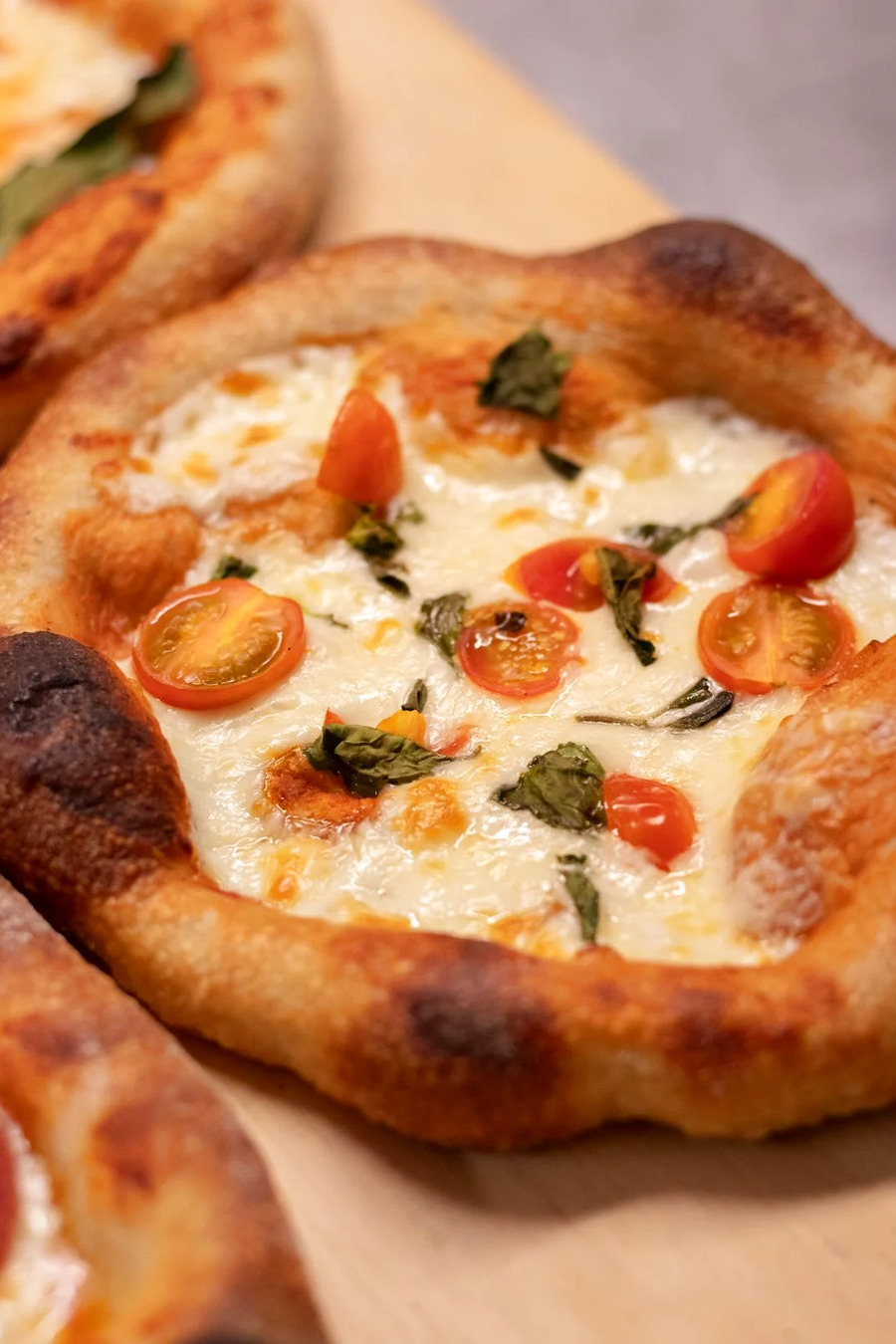
Thick tray focaccia with potatoes and rosemary, soft inside and golden outside. I bake it when I want a simple bread with real character for dinner or a savory snack.
Recipe facts
Details
- Prep: 20 min
- Cook: 25 min
- Servings: 8 servings
- Difficulty: Medium
- Cost: €
Nutrition (per serving)
- Calories: 320 kcal
- Protein: 8 g
- Carbs: 55 g
- of which sugars: 2 g
- Fat: 8 g
- of which saturates: 1 g
- Fiber: 3 g
- Sodium: 520 mg
- Cholesterol: 0 mg
Indicative values only. This does not replace medical advice.
Ingredients
- 500 g bread flour
- 350 ml lukewarm water
- 8 g fresh yeast (or 3 g dry)
- 10 g salt
- 20 ml extra-virgin olive oil
- 1 teaspoon sugar
- 2 medium potatoes
- Fresh rosemary
- Coarse salt
- Olive oil for the top
Method
- Dissolve yeast and sugar in part of the lukewarm water.
- Combine flour and salt, then add yeast water and oil. Knead until smooth.
- Cover and let rise 1-2 hours until doubled.
- Oil a tray, stretch the dough with your hands, and rest 30 minutes.
- Slice potatoes thinly, season with oil and salt.
- Arrange potatoes on the focaccia, press lightly, add rosemary and coarse salt.
- Drizzle oil and bake at 220 C for 20-25 minutes.
- Let rest 10 minutes before slicing.
Hydrated, soft dough
Water is the key. A well-hydrated dough stays soft even the next day. It can feel sticky at first, and that is normal.
I knead by hand to feel the texture. If you use a mixer, keep it on low speed.
Stress-free proofing
Proofing time depends on temperature. In winter I use the oven with just the light on.
If I am short on time, I increase yeast slightly, but long proofing always tastes better.
Potatoes and top
Potatoes must be thin so they cook through. I season them lightly so they do not dry out.
A little coarse salt gives contrast without overpowering the dough.
Baking
Hot oven and a shallow tray: that gives a crisp base and a soft inside.
If the top colors too fast, cover loosely with baking paper for the last minutes.
Storage
It keeps for 2 days. I reheat in the oven for 5 minutes to refresh the softness.
When I bake this focaccia, I think about the texture I want: tall, pillowy, with a thin crust. It is a small balance of water, time, and heat.
I avoid adding too much bench flour. A thin layer of oil on my hands is enough to stretch the dough.
Potatoes change everything. They make the top creamy and add a rustic aroma that I love.
Sometimes I use boiled potatoes and press them gently. The result is softer and more delicate.
A few black olives work beautifully here if you want a salty accent.
I slice with a serrated knife to keep the crumb intact. Clean cuts keep it beautiful on the plate.
Fresh herbs are the easiest upgrade. Rosemary is classic, but thyme works too.
If I am serving a crowd, I cut it into small squares. It disappears quickly.
Letting it cool slightly makes the aroma more pronounced and the slices cleaner.
On busy days I use one long proof instead of two. It still works.
The final drizzle of oil is not just for shine. It keeps the top soft and fragrant.
For a crispier top, I switch to fan mode in the last 5 minutes.
I often serve it instead of bread. It is more filling and feels special.
I always check the bottom. A golden base is the sign that it is done.
Focaccia is great for stuffing, but I also love it plain while it is still warm.
Leftovers toast well the next day. The edges get crisp and the middle stays tender.
The rhythm of kneading is calming. It is a small kitchen ritual for me.
This is a forgiving dough. If you respect time and hydration, it works.
I like letting kids add the rosemary. It makes them feel part of the process.
Sometimes I use purple potatoes for a visual twist. The flavor stays familiar but looks new.
In summer I pair it with tomatoes. In winter I eat it with soups and stews.
My focus is always the same: softness and aroma. If I get those, I am happy.
I cover the dough with lightly oiled plastic so it does not dry out during proofing.
Patience is part of the recipe. The rise is not wasted time; it is flavor.
When I cook this, I remind myself that careful steps always beat rushing. It is a small habit that keeps the result reliable.
The detail that makes it work
For Thick focaccia with potatoes and rosemary, the key is a careful finish at the end: it changes the whole plate. With 180 minutes with Medium effort, it is a recipe I can repeat easily. To keep the budget (€), I keep to pantry staples and simple portions.
FAQ
Yes, use 3 g of dry yeast instead of fresh.
No, slice them thin and place them raw on top.
Yes, proof in the fridge and bake the next day.